In the vast universe of Vedic astrology, two systems stand out: the familiar Zodiac signs and the more intricate Nakshatras. Many beginners wonder: are Nakshatras more accurate than Zodiac signs? This is a fiery debate that has sparked curiosity for centuries. While both offer valuable insights, understanding their distinct roles reveals a deeper layer of astrological truth. Let's dive into this fascinating comparison and uncover which system might hold the key to more precise predictions and self-understanding.
Quick Answer / Key Takeaway
While Zodiac signs offer a broad overview of personality, Nakshatras provide much finer, nuanced details in Vedic astrology. They are considered more accurate for in-depth analysis, especially for predicting specific events and understanding subtle karmic patterns. Think of Zodiac signs as the main chapters of a book and Nakshatras as the detailed subheadings and paragraphs within those chapters, offering a richer, more precise narrative.
The Foundation: Understanding Zodiac Signs
Most people are familiar with the twelve Zodiac signs: Aries, Taurus, Gemini, Cancer, Leo, Virgo, Libra, Scorpio, Sagittarius, Capricorn, Aquarius, and Pisces. These signs are based on the Sun's apparent path through the sky, known as the ecliptic. Each sign spans roughly 30 degrees of this path.
Western astrology primarily uses these Zodiac signs to describe general personality traits, strengths, weaknesses, and life themes. For example, someone born under Aries is often described as energetic and impulsive, while a Taurus is seen as grounded and sensual. These descriptions are broad strokes, giving us a general idea of a person's core energy.
What Zodiac Signs Tell Us
Zodiac signs are excellent for understanding:
- Your Sun sign's core personality and ego.
- General life tendencies and motivations.
- Basic compatibility with other signs.
- The foundational energy of your birth chart.
They are like the main colors on a painter's palette – vibrant and defining, but not the entire picture.
The Deeper Dive: Introducing Nakshatras
Vedic astrology, or Jyotish, goes a step further with the concept of Nakshatras. The ecliptic is divided into 27 Nakshatras, each spanning 13 degrees and 20 minutes. This finer division offers a much more detailed map of the cosmos and its influence on our lives.
Each Nakshatra has its own ruling deity, symbol, characteristics, and planetary lord. This adds multiple layers of meaning and interpretation. While your Sun sign tells you *which* general energy you embody, your Moon sign's Nakshatra can reveal *how* you process emotions and your inner nature. And the Nakshatra of your Ascendant (Lagna) can show the finer points of your personality and how you present yourself to the world.
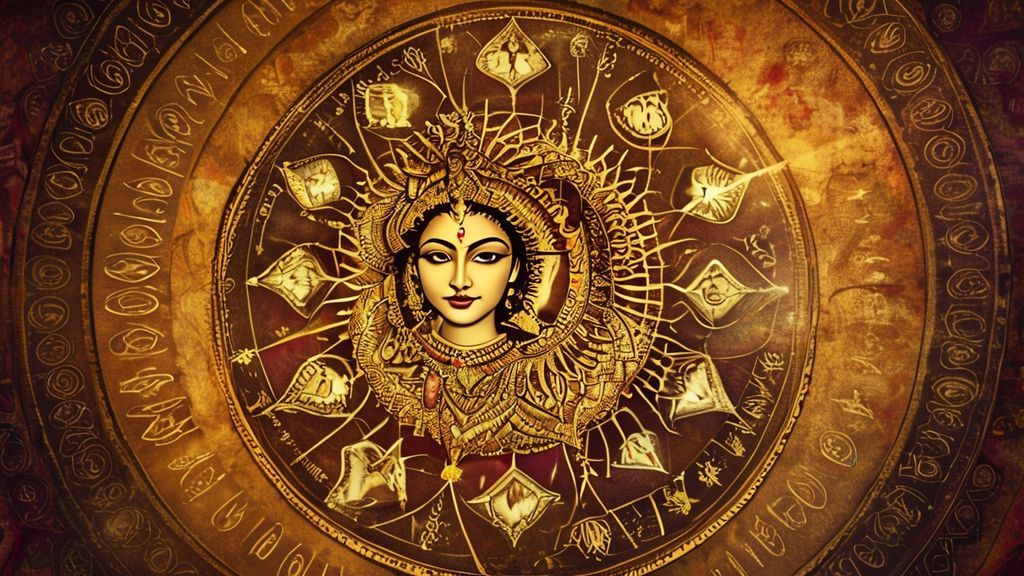
[IMAGE_DESC: An artistic representation of the 27 Nakshatras arranged in a circular chart, perhaps with celestial imagery.]
Why Nakshatras are Considered More Accurate
The primary reason Nakshatras are often considered more accurate is their granularity. Imagine trying to describe a complex landscape. Zodiac signs are like naming the continents, while Nakshatras are like mapping out individual mountain ranges, rivers, and valleys within those continents. This allows for a much more precise understanding.
Nakshatras are crucial for:
- Pinpointing specific behavioral patterns and psychological nuances.
- Understanding karmic influences and destiny.
- Detailed relationship compatibility (through synastry and the concept of the Nakshatras of married couples).
- Predicting timing of events using Nakshatra-based astrological techniques like Vimshottari Dasha.
- Identifying specific strengths, challenges, and potential remedies.
For instance, two people might both be 'Aries' by Sun sign, but if one's Sun is in Ashwini Nakshatra (ruled by Ketu, associated with quick action and healing) and the other's is in Bharani Nakshatra (ruled by Venus, associated with creation and transformation), their experiences of being an Aries will be vastly different. This is where the accuracy of Nakshatras shines.
The Relationship Between Zodiac Signs and Nakshatras
It's not a case of one system being 'right' and the other 'wrong.' They work together. The 12 Zodiac signs are like the major divisions on a map, and the 27 Nakshatras are the detailed subdivisions within them. Every Nakshatra falls within a specific Zodiac sign.
For example, the first nine Nakshatras (Ashwini, Bharani, Krittika, Rohini, Mrigashira, Ardra, Punarvasu, Pushya, Ashlesha) fall within the Zodiac signs Aries and Taurus. This means that while you have the overarching energy of Aries or Taurus, your specific Nakshatra within that sign adds a unique flavor and depth.
How Nakshatras Refine Zodiac Meanings
Let's take Gemini, the sign of communication and duality. If a Gemini's Moon is in Punarvasu Nakshatra (ruled by Jupiter, associated with expansion and wisdom), they might be a philosophical communicator. If their Moon is in Ardra Nakshatra (ruled by Rahu, associated with intensity and transformation), they might be a more intensely analytical or even disruptive communicator. The Zodiac sign gives the general theme, while the Nakshatra specifies the particular expression.
Key Differences Summarized
Here's a quick breakdown of the core differences:
- {Number of Divisions}: Zodiac signs have 12 divisions; Nakshatras have 27.
- {Degree Span}: Zodiac signs span ~30 degrees; Nakshatras span 13°20'.
- {Depth of Analysis}: Zodiac signs provide a broad overview; Nakshatras offer detailed nuances.
- {Focus}: Zodiac signs often focus on the Sun's placement for personality; Nakshatras are vital for Moon, Ascendant, and planetary placements for deeper insights and predictions.
- {Astrological System}: Zodiac signs are foundational in Western astrology and also used in Vedic; Nakshatras are a cornerstone of Vedic astrology (Jyotish).
The Role of the Moon in Nakshatra Significance
In Vedic astrology, the Moon's position is considered extremely important. The Moon represents your mind, emotions, mother, nurturing, and subconscious patterns. Therefore, the Nakshatra your Moon occupies in your birth chart is often seen as more influential than your Sun sign's Nakshatra for understanding your inner world and emotional landscape.
For example, if your Sun is in Leo but your Moon is in Cancer in Ashlesha Nakshatra, your outward confidence (Leo Sun) might be colored by deep-seated emotional sensitivities and potentially manipulative tendencies (Cancer Moon in Ashlesha). Understanding these layers is key to accurate astrological readings. This is a core concept in [LINK_PLACEHOLDER: Vedic Moon sign astrology].
Nakshatras and Predictive Astrology
When it comes to predicting specific life events, Nakshatras are indispensable. Techniques like the Vimshottari Dasha system, a prominent predictive tool in Vedic astrology, are entirely based on the Nakshatra of your Moon at birth. This system divides your life into periods ruled by different planets, with the timing and nature of these periods being intricately linked to your Moon's Nakshatra.
Without understanding Nakshatras, predictive astrology in the Vedic system would be significantly limited. The subtle shifts and energies associated with each Nakshatra allow astrologers to forecast trends, opportunities, and challenges with remarkable precision. This is a significant reason why many consider them to be the more accurate layer of astrological interpretation.
Compatibility: Beyond Sun Signs
While Sun sign compatibility offers a general idea of how two people might get along, Nakshatra compatibility delves much deeper. In Vedic astrology, there are specific methods for comparing the Nakshatras of individuals, especially the Moon's Nakshatras, to understand the potential for harmony, attraction, conflict, and long-term connection.
There are 27 Nakshatras, and within them, there are various compatibility 'groups' or 'types' (like the 10 Gunas or the 4 Padas). These systems allow for a much more nuanced assessment of a relationship's strengths and weaknesses than simply looking at two Zodiac signs. For example, two people with the same Nakshatra often share a profound, almost fated connection, whether positive or challenging. Exploring [LINK_PLACEHOLDER: Vedic relationship compatibility] using Nakshatras provides a much richer picture.
The Fiery Debate: Accuracy vs. Accessibility
The debate about whether Nakshatras are more accurate than Zodiac signs often comes down to a balance between accessibility and depth. Zodiac signs are easy to understand and widely accessible, making them a great starting point for anyone interested in astrology. They provide a foundational understanding of cosmic influences.
However, for those seeking a more profound, detailed, and predictive understanding of their chart and life path, Nakshatras are essential. They unlock the finer subtleties of planetary influences and karmic patterns that Zodiac signs alone cannot reveal. Think of it as the difference between a sketch and a detailed oil painting. Both have artistic merit, but the painting offers far more depth and realism.
Conclusion: Embrace the Full Spectrum
So, are Nakshatras more accurate than Zodiac signs? In terms of detailed analysis, prediction, and understanding subtle karmic influences, yes, Nakshatras offer a significantly deeper and more precise level of insight. They are a vital component of Vedic astrology for anyone seeking a comprehensive astrological roadmap.
However, Zodiac signs are not obsolete. They provide a crucial, accessible framework. The most complete astrological understanding comes from integrating both systems. Your Sun sign might tell you your general life purpose, but your Moon's Nakshatra can reveal your inner emotional needs, and the Nakshatras of other planets can shed light on specific talents and challenges. Embracing the wisdom of both Zodiac signs and Nakshatras allows for a truly holistic and accurate understanding of your unique astrological blueprint. If you're interested in exploring this further, consider looking into [LINK_PLACEHOLDER: your personalized birth chart analysis].